

KCC Programs
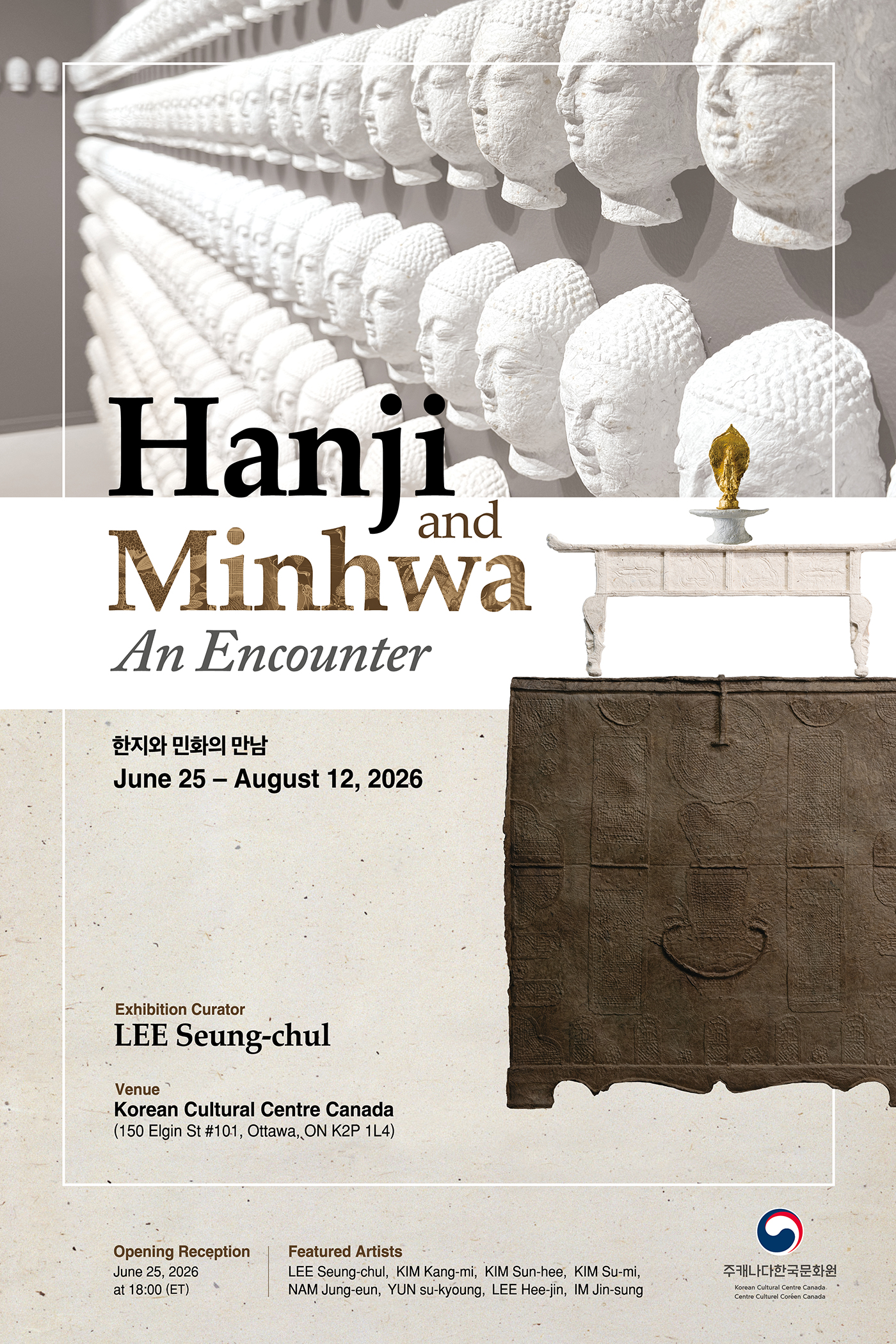
Hanji and Minhwa: An Encounter
-
Event Period
Jun 25, 2026
-
Aug 12, 2026
The Korean Cultural Centre Canada is pleased to present <Hanji and Minhwa: An Encounter>, on view from June 25 to August 12, 2026, featuring artists LEE Seung-chul, KIM Kang-mi, KIM Sun-hee, KIM Su-mi, NAM Jung-eun, YUN Su-kyoung, LEE Hee-jin, and IM Jin-sung.
This exhibition explores points of intersection between material and time, memory and perception, and tradition and the present through works that reinterpret hanji (traditional Korean paper) and minhwa (Korean folk painting) through a contemporary lens. The participating artists construct their own visual languages using diverse traditional materials and visual elements, including hanji, natural dyeing techniques, and munjado (letter paintings). Rather than simply reproducing historical forms, their works reconnect the temporal and sensory dimensions embedded within tradition with the language of the present.
Exhibition Details
- Exhibition: Hanji and Minhwa: An Encounter
- Dates: June 25 – August 12, 2026
- Venue: Korean Cultural Centre Canada (150 Elgin St #101, Ottawa, ON K2P 1L4)
- Featured Artists: LEE Seung-chul, KIM Kang-mi, KIM Sun-hee, KIM Su-mi, NAM Jung-eun, YUN Su-kyoung, LEE Hee-jin, IM Jin-sung
- Exhibition Curator: LEE Seung-chul
Featured Artists
LEE Seung-chul 이승철
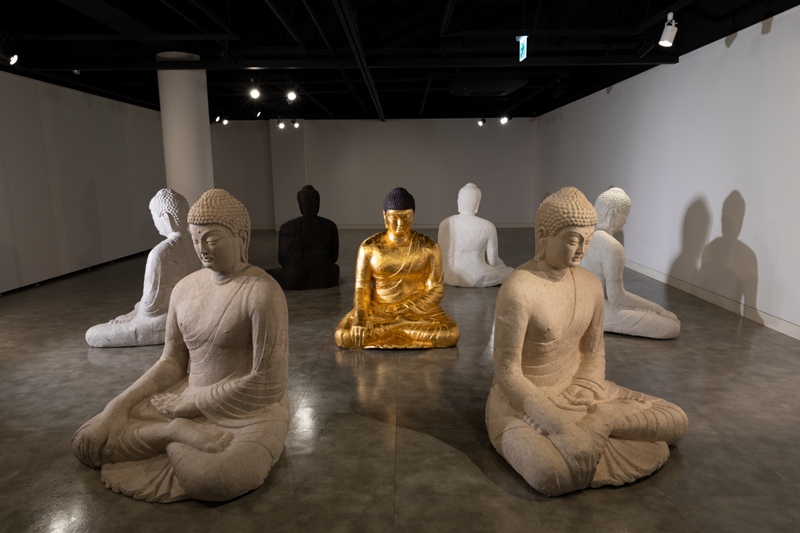
LEE Seung-chul has spent over three decades researching hanji and traditional natural dyeing techniques. His practice explores the relationships between preservation and disappearance, memory and continuity, anchoring these concepts in the materiality and temporality of nature. Drawing on extensive research in cultural heritage conservation, he continuously expands hanji beyond its traditional function, translating it into the language of contemporary aesthetics.
KIM Kang-mi 김강미
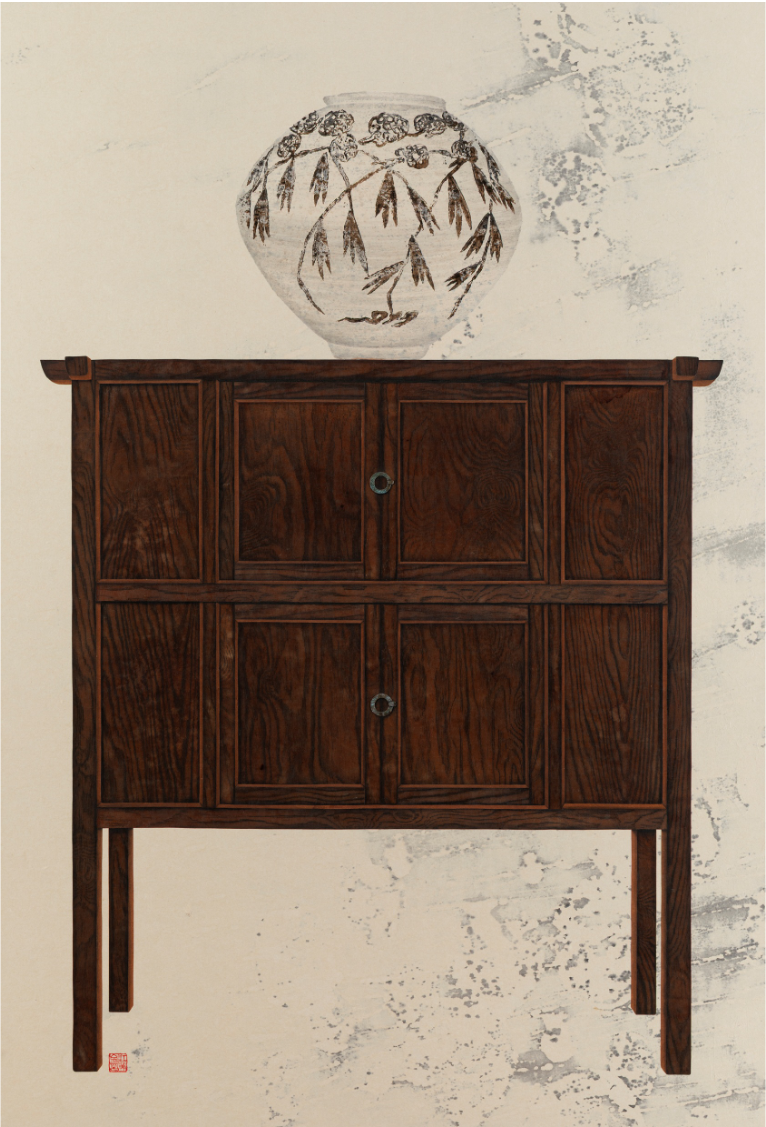
<A Walk Through Time and Space (III)>, mixed media on jangi paper, 140 × 90 cm, 2025
KIM Kang-mi’s work reinterprets traditional chaekgeori (scholar’s bookshelf paintings) using authentic Eastern mediums and techniques, including hanji, persimmon dye, clay, and frottage. Her representative series, <A Walk Through Time and Space (시공산책 / 時空散策)>, explores the intersections between ideal and reality. By employing repeated structures and accumulated material traces, she visually manifests the dense layers of time.
KIM Sun-hee 김선희
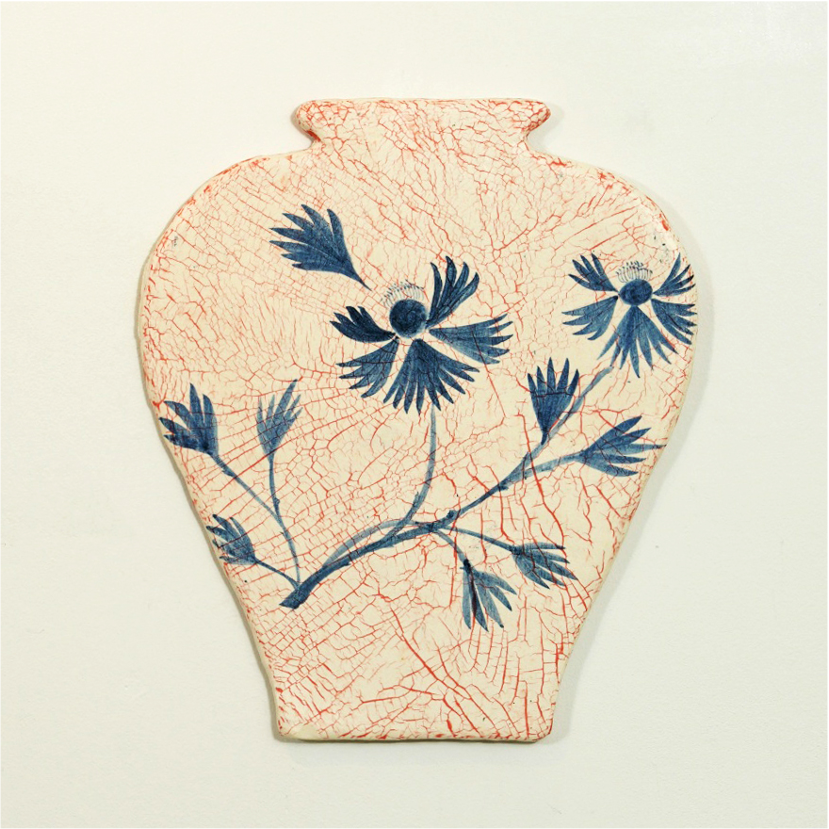
<Dream of Blue-and-White Porcelain>, white clay, colored engobe, cobalt pigment, matte transparent glaze, 2025
KIM Sun-hee bridges the worlds of ceramic art and traditional minhwa painting. Viewing ceramics as "a quiet universe shaped through the language of earth and fire," she uses clay as a canvas, inscribing Korean folk flowers onto the surfaces to create a profound artistic dialogue across time and space
KIM Su-mi 김수미
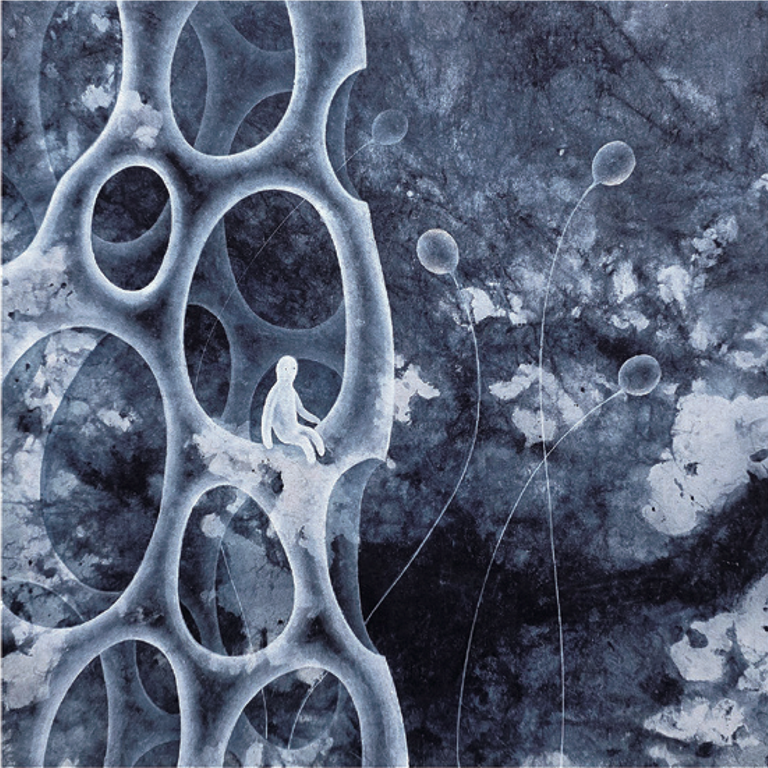
<Forest of Momo>, pigment on hanji, indigo dye, 32 × 32 cm, 2026
KIM Su-mi creates narrative and poetic imagery on dak (handmade mulberry paper) infused with natural dyeing techniques. Viewing human life as an extension of nature’s recurring cycles, she treats stains and diffusion as more than mere material effects; instead, they embody the profound structures of creation and dissolution, presence and absence.
NAM Jung-eun 남정은
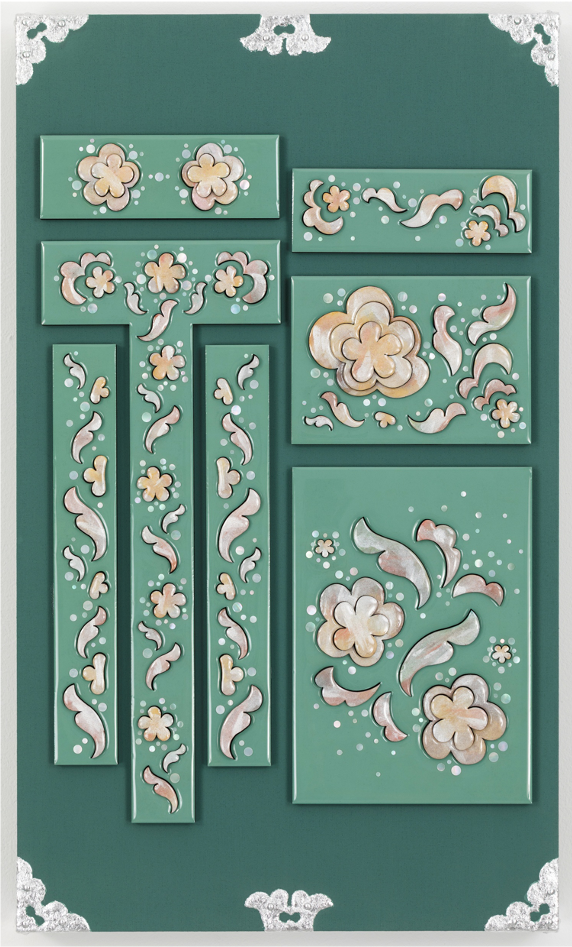
<Fortune (福)>, mixed media on wood, 52.5 × 31 cm, 2026
NAM Jung-eun reinterprets traditional munjado (letter paintings), focusing particularly on the character bok (fortune) to explore the themes of relationship and happiness. By intertwining paint, thread, mother-of-pearl, and resin, she creates rich, layered expressions of emotion and time.
YUN Su-kyoung 윤수경
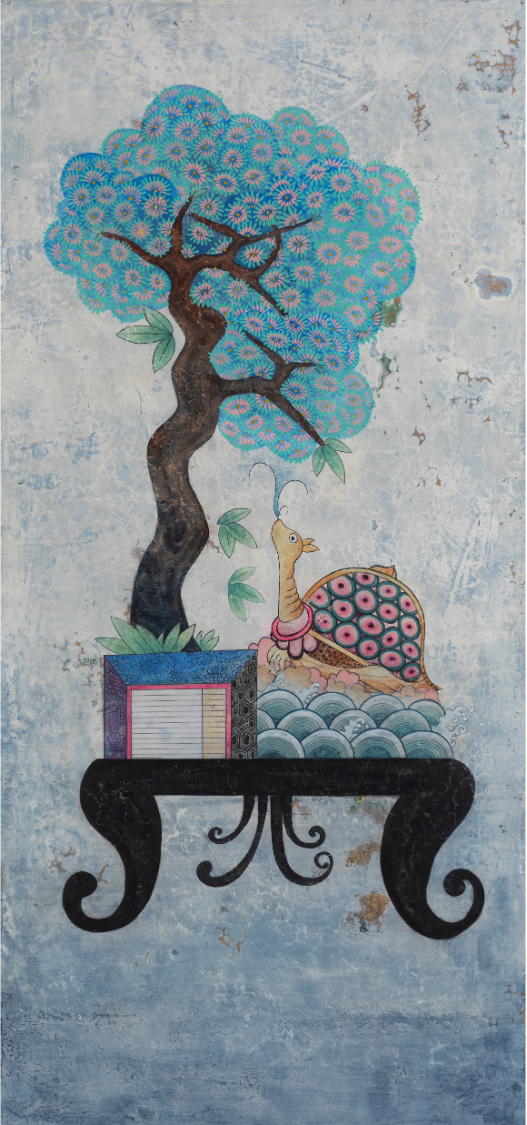
<Wandering>, mixed media on hemp cloth, 64 × 134 cm, 2025
Grounded in the techniques and motifs of traditional Korean painting, YUN Su-kyoung’s work explores the concepts of rest and reflection in contemporary life. By incorporating tactile natural materials like clay, she reminds us that genuine rest is not a distant ideal, but something found within the spaces of everyday life.
LEE Hee-jin 이희진
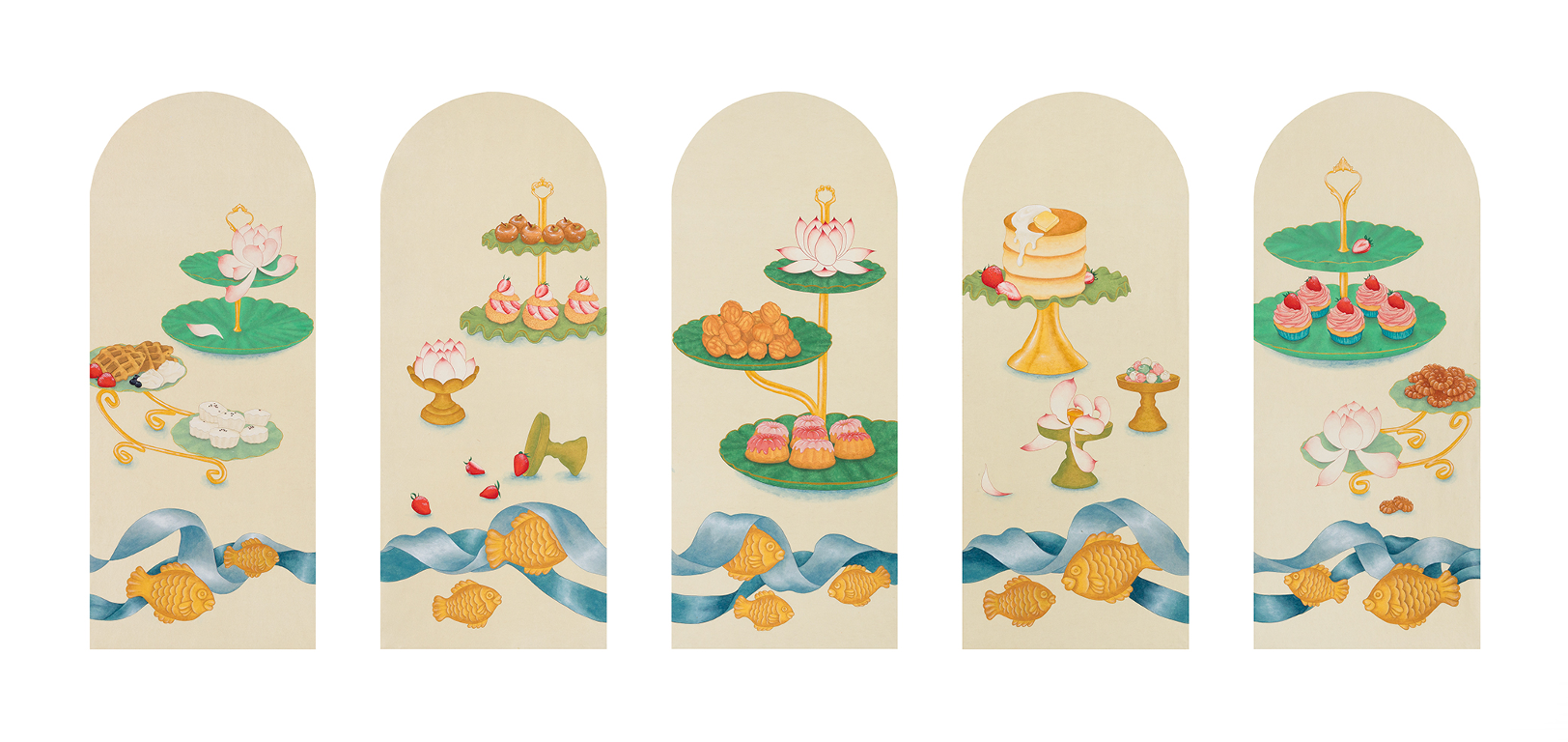
<Frosting – Everyday Confection>, mineral pigments on mulberry paper (sunjji), 110 × 45 cm × 5, 2026
Through contemporary reinterpretations of traditional minhwa, LEE Hee-jin merges classical iconography with modern motifs to explore the narratives of everyday life. Her works playfully bridge the past and present, offering vibrant, fresh perspectives on familiar experiences.
IM Jin-sung 임진성
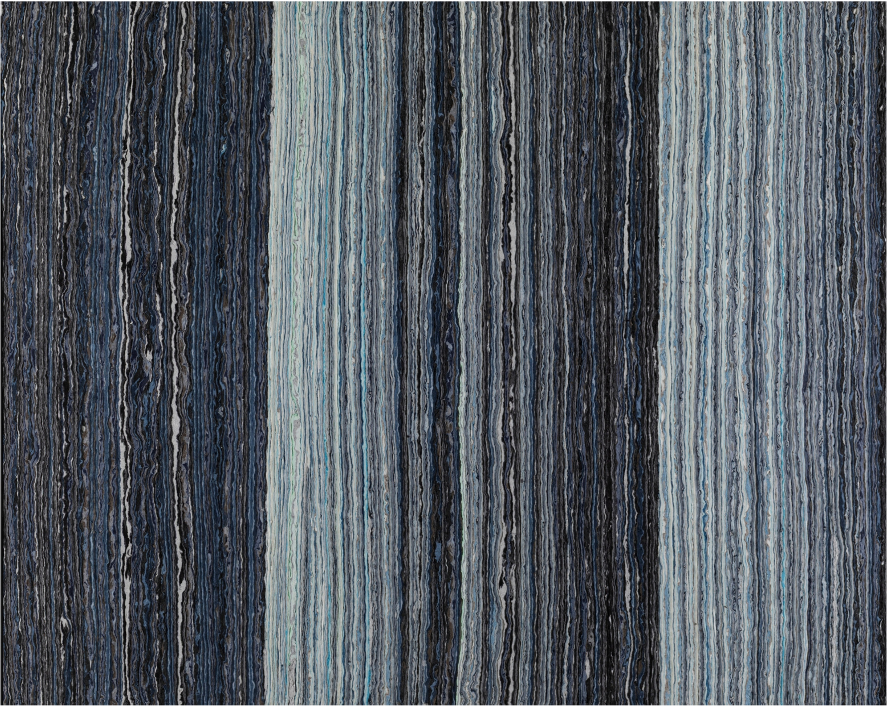
<Waterfall>, handmade hanji, 162.2 × 130.3 cm, 2025
Using hanji as a foundational medium, IM Jin-sung explores intersecting layers of materiality, time, and sensory experience. Moving beyond the traditional role of paper as a mere surface, he expands its physical and emotional qualities into a distinct contemporary visual language.
Artist Statement / LEE Seung-chul
Rather than standing upon what has already been made,
I wish to remain beside the moment of becoming.
Uniformly cut paper,
precisely measured colors,
and flawlessly reproduced surfaces are convenient,
yet they often feel too rigid
to contain the trace of my own breath.
So I make the paper again.
I loosen the fibers, soak them in water,
and wait through the passing time
of flowing and drying
until a surface is finally born.
Within that surface remain delicate textures,
the pressure of the hand,
and the traces left by water.
I do not simply place images upon it;
I breathe together with the material itself.
I believe color is not something merely given,
but something drawn up from within.
Pigments gathered from nature
contain the time of light, air, and seasons.
Even when made through the same process,
they reveal different depths each time.
I do not erase those differences.
Rather, within such irregularities,
I discover the place where images emerge.
To create materials
is to touch time before form.
It is to place myself
within the process that precedes completion.
I do not seek to reproduce tradition.
Instead, I hope to pass through myself
the slow sensibility
and the attitude toward material
embedded within older ways of making.
In doing so,
I hope that a breath carried across time
may continue once again
here, in the present moment.
My work is less about creating images
than about questioning the ground beneath them.
Upon what kind of paper do we stand.
Through what colors do we breathe.
Through what layers of time do we pass.
Today again,
I return to the place before expression begins.
And there, slowly,
I continue to shape my own language.

 Facebook
 YouTube
 Instagram
