

KCC Programs
2021 Korean Modern Art: Daegu Scenery
- Post DateSep 08, 2021
|
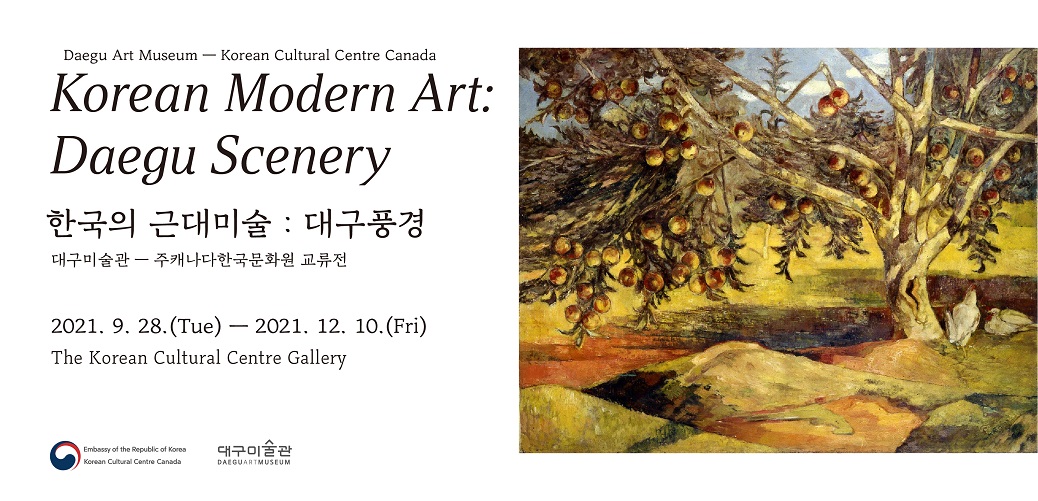
Image: Lee Insung, Apple Tree, 1942, oil on Canvas, Daegu Art Museum
The Embassy of the Republic of Korea to Canada, the Korean Cultural Centre, and Daegu Art Museum, present <Korean Modern Art: Daegu Scenery> at the KCC Gallery from Tuesday, September 28, to Friday, December 10, 2021.
The first major exhibition of Korean modern art shown in Canada, <Korean Modern Art: Daegu Scenery> highlights the works of three outstanding artists from Daegu: LEE In-sung, SEO Dongjin, and JEON Seontaek. Located in southeastern Korea, the city of Daegu is known as the birthplace of Korean modern art. This recognition comes from the artists' creative endeavors, who built their unique modern art style in the region between the 1920s and the 1950s.
In particular, this exhibition focuses on Daegu's scenery paintings. Under the influence of the newly introduced Western art, the artists developed their unique style and pursued their love for the nation and their hometown by painting the local scenery. It also features five rare modern Korean paintings, recently donated to the Daegu Art Museum from the LEE Kun-hee Collection of the late Samsung chairman.
We hope this exhibition provides an opportunity to strengthen the friendship and mutual understanding between Korea and Canada by sharing stories of Korean modern art and artists with our fellow Canadians.
ABOUT THE EXHIBITION
<Korean Modern Art: Daegu Scenery> presents the works of three representative artists of Korean modern painting: LEE Insung, SEO Dongjin, and JEON Seontaek. With a focus on scenery paintings, most works in this exhibition come from the Daegu Art Museum Collection, including five rare pieces recently donated from the LEE Kun-hee Collection. The show intends to introduce Korean modern art to the Canadian audience by presenting its modern paintings of local scenery and contemplating the meaning of scenery in the context of Korean modern history.
LEE Insung, SEO Dongjin, and JEON Seontaek have in common that they quickly learned the Western painting style after its introduction in the 1920s and captured Daegu’s scenery of those days with their own style and interpretation.The notion of 'scenery' here is a slightly broader concept than that of 'landscape' we usually think of in English. It reflects the reality and life that each artist faced, including the expression and atmosphere of the times.
In this exhibition, LEE Insung’s scenery and still life paintings show his unique style and colorful sense, influenced by Impressionism. <Woman in Yellow (1934)>, a portrait of his wife Ok-soon Kim, reveals the appearance of modern girls in Korea at that time. SEO Dongjin established 'Daegu Misulsa (an art company)' in 1927 and 'Hyang-toh-hoe (Daegu artist society)’ in 1930, contributing greatly to the formation of watercolor painting as a genre in Daegu locally and in Korea nationally. SEO often picked street views and neighborhood images of Daegu as the main subject of his art in a way to express his love for his hometown and the nation. JEON Seontaek originally came from northern Korea and settled in Daegu in the 1950s. JEON’s painting shows continuous changes in his focus on the subject from natural motifs to flat appearances and his style from non-figurative to the pre-abstract stage.
The <Korean Modern Art: Daegu Scenery> exhibition takes us through a journey to the very distinct gazes and interpretation of Korean scenery represented through the eyes of three masters of Korean modern art.
ABOUT THE ARTISTS
1. LEE Insung (1912-1950, Daegu)
LEE Insung won a prize in the Joseon Art Exhibition at the age of 17 and is considered one of the great geniuses throughout Korean art history. After graduating from Suchang Public School, LEE started working at SEO Dongjin’s Daegu Misulsa (an art company), where he learned about watercolor painting. He participated in Young-gwa-hoe (an art and literature group organized by young artists in Daegu) in 1929 and was also involved in establishing Hyang-toh-hoe (Daegu artist society) in 1930 after Young-gwa-hoe became a target of surveillance by the Japanese police and disbanded in 1929. One of the most decorative artists of that time, LEE won his first prize in the 8th Joseon Art Exhibition in 1929 with <Shadow>. Then, LEE moved to Tokyo in 1931, worked at a crayon company during the day, and studied art at the Pacific Art School (Daiheiyo) at night until 1935. LEE had his first solo exhibition in Daegu in 1933, won the Special Prize at the 13th Joseon Art Exhibition in 1934 with <On an Autumn Day>, and the Best Prize in 1935 with <In the Mountain Valley of Gyeongju>. After that, LEE opened LEE Insung Western Painting Research Office and ran the tearoom ARS as a gathering place for artists while focusing on painting. LEE taught at Ewha Women’s High School as a lecturer and served as a jury member for the Korean National Art Exhibition for the Western Painting Section. He died at the age of 39 in a tragic accident in 1950. Despite having left not many works in his short life, LEE produced many masterpieces, including <In the Mountain Valley of Gyeonju>, which was ranked No. 1 in the Korean Modern Oil Painting Top 10 list published by the Monthly Art in 1998.
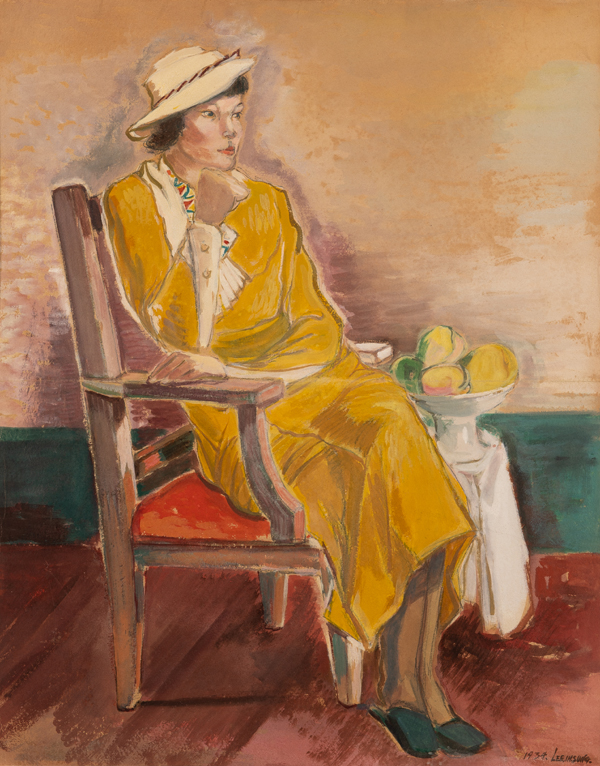
LEE Insung, <Woman in Yellow>, 1934,
color in paper, 75x60cm, Daegu Art Museum
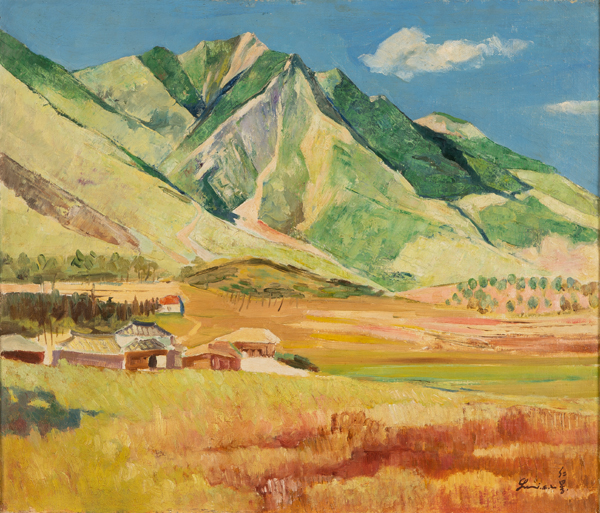
LEE Insung, <Scenery>, 1930s,
oil on canvas, 44.5x51.5cm, Daegu Art Museum
2. SEO Dongjin (1900-1970, Daegu)
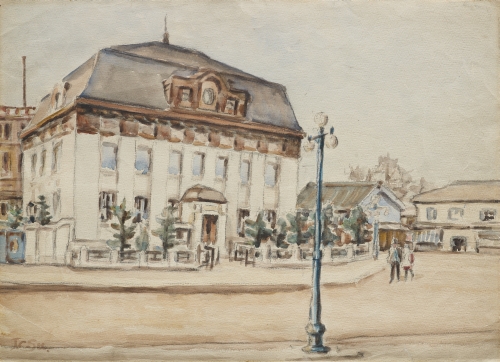
SEO Dongjin, <Snowy Scene>, year unknown,
watercolor on paper, 45.5×61cm, Daegu Art Museum
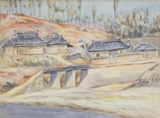
SEO Dongjin, <Scenery>, year unknown,
watercolor on paper, 27x38cm, Private Collection
3. JEON Seontaek (1922-, Jungju, North PyungAn Provance)
JEON learned painting in Osan School in 1942 from the YIM Yongryun and BAEK Namsun couple, the first generation of Euro-American school of study, and studied western painting in the Tokyo Gawabata Art School in 1943. JEON settled in Daegu after the Korean War and taught at Daeryun Middle School and Youngnam University. He won prizes three times at the Korean National Art Exhibition between 1960 and 1963 and received the Special Invitation Award from the City of Daegu in 1995 and the Daegu Art Award in 1996. JEON’s works were exhibited extensively both in Korea and abroad, including in England and Germany.
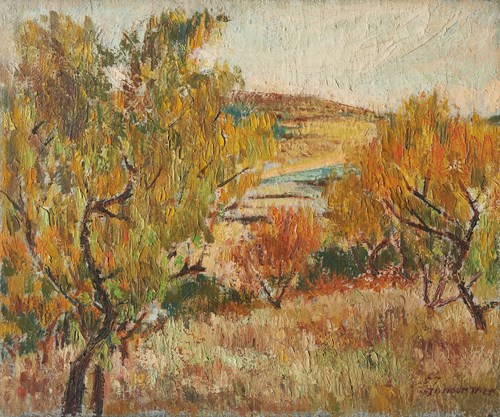
JEON Seontaek, <Untitled>, 1957,
oil on canvas, 37.5cm×45cm, Daegu Art Museum
Gallery Information
- Korean Cultural Centre Gallery (101-150 Elgin Street, Ottawa)
canada.korean-culture.org
- Hours: 9:00~17:00/ Monday ~ Friday
- Inquiry & Reservation: canada@korea.kr/ 613-233-8008
Starting September 22, 2021, anyone 12 and older is require proof of vaccine and photo ID to visit the Korean Cultural Centre under the COVID-19 protocol by the Ontario Provincial Government. Contact tracing will also continue. COVID-19 vaccination receipts can be downloaded through Ontario Healthhere. We thank you for your patience and understanding.
The Korean Cultural Centre is open from Monday to Friday, 9:00AM – 5:00PM. Admission is FREE. The safety of our visitors and staff is our top priority.
• All visitors must complete a self-assessment before coming to KCC, https://covid-19.ontario.ca/screening/customer/. This assessment doesn’t need to be emailed to the KCC at this time. It’s just to confirm you have been cleared to visit KCC.
SAFETY PROTOCOLS:
• During open hours, the building, including washrooms, will be cleaned regularly.
• Social distancing measures will be in place while in the building.
• Please wear your mask at all times while visiting the KCC Gallery. If you do not have a mask, a complimentary one is available for you at our Reception desk.
• Plexi-glass barriers have been installed at the Reception desk.
• Hand sanitizing stations are available at the Reception desk and the washroom.
• We advise all visitors and staff who are sick to please stay at home, get tested, or self-isolate.

 Facebook
 YouTube
 Instagram
